Harvesting Hope Project
Improved Seed Distribution & Agricultural Support
Background & Context
Karamoja remains one of Uganda's most persistently food-insecure regions. Napak District, situated in the heart of this semi-arid zone, is home to Karamojong communities whose livelihoods depend primarily on subsistence farming and pastoralism. Erratic rainfall, prolonged dry spells, and extremely limited access to agricultural inputs mean that crop failure and food shortages are recurring realities for most households.
For the majority of families in Napak, the primary barrier to food security is not a lack of willingness to farm, but a lack of the basic inputs needed to make farming productive. Improved seed varieties, which offer higher yields, better drought tolerance, and disease resistance, are largely out of reach for poor households who rely on recycled local seeds that progressively decline in quality with each season.
It is from this context that Asili Caring Hand developed the Harvesting Hope Project — an agricultural support initiative designed to put improved seeds directly into the hands of the most vulnerable farming households in Napak, while also providing practical field support to help beneficiaries maximize the potential of their gardens. The project embodies Asili Caring Hand's belief that lasting food security is built not through dependency, but through investing in communities' own capacity to grow and feed themselves.
Key Objectives
- •To distribute improved maize seeds to vulnerable households in Napak District, prioritizing female-headed households, families with young children, and elderly community members, to improve their agricultural productivity and household food security.
- •To conduct field assessments of community maize gardens, documenting crop health, growth stages, and any agricultural challenges observed, in order to inform continued support and future programming.
- •To provide on-site agricultural guidance to community farmers, supporting better farming practices including weeding, spacing, and field management to improve crop yields.
- •To strengthen Asili Caring Hand's presence and relationships in Napak, building the trust and community networks necessary for sustained long-term engagement in the region.
Rationale & Justification
In Karamoja, hunger is not an abstraction — it is a lived reality for families who watch their children go without food during the lean season while their fields lie unproductive for lack of good seed. The Harvesting Hope Project was justified by the clear and documented need for agricultural input support in Napak, where the majority of households lack access to improved seeds and rely on declining local varieties that cannot sustain a reliable harvest.
Improved maize seed is among the highest-impact, lowest-cost interventions available in the agricultural development toolkit. A single packet of improved seed, planted and managed well, can yield several times more grain than the local variety it replaces — enough to feed a family through the hungry season and beyond. By prioritizing the most vulnerable households, including those headed by women and the elderly, the project ensured that its impact reached those who needed it most.
The combination of seed distribution with field assessment and on-site agricultural support distinguished Harvesting Hope from a simple handout programme. By engaging directly with beneficiaries in their fields, the Asili Caring Hand team was able to ensure seeds were planted correctly, identify challenges early, and provide practical guidance that extended the value of the intervention well beyond the moment of distribution.
Activity Description & Field Execution
The Harvesting Hope Project was implemented across communities in Napak District, Karamoja, during the 2023 growing season. The Asili Caring Hand team conducted household visits across the target communities, combining seed distribution with direct engagement in beneficiaries' fields.
Household Seed Distribution
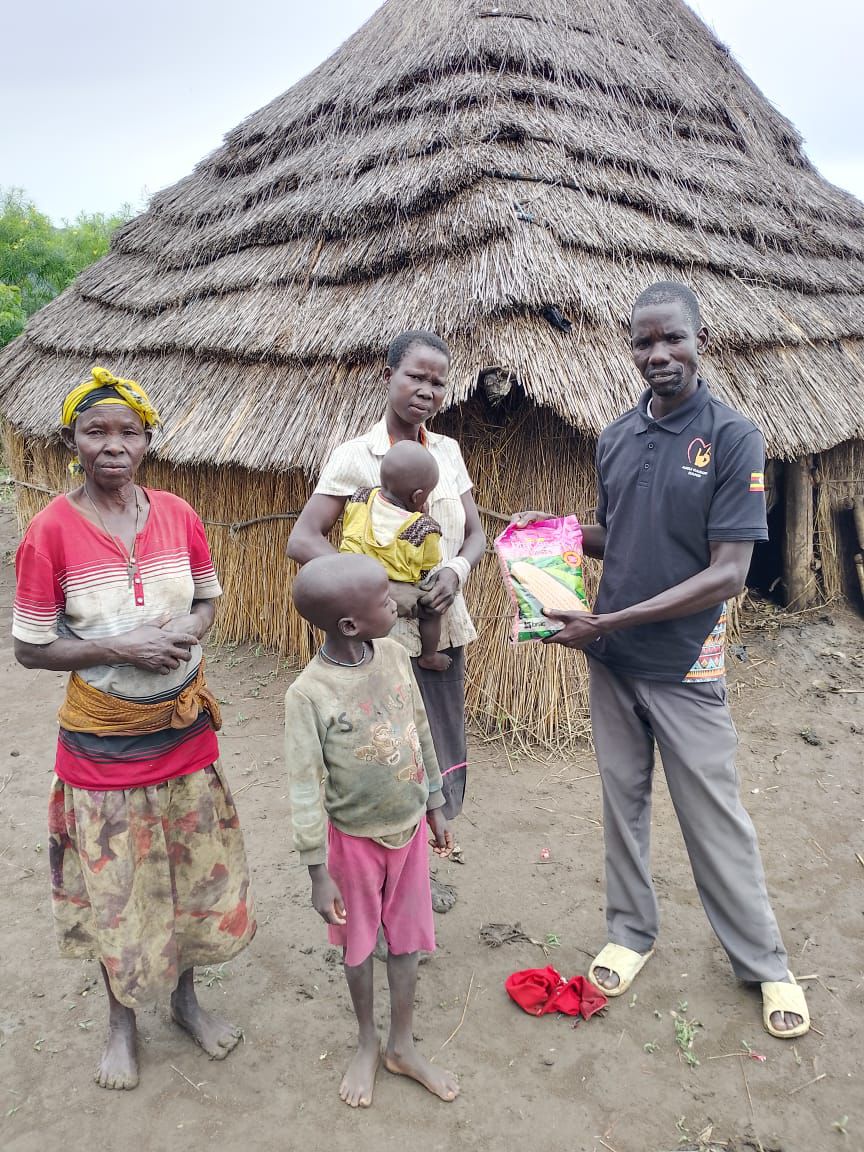
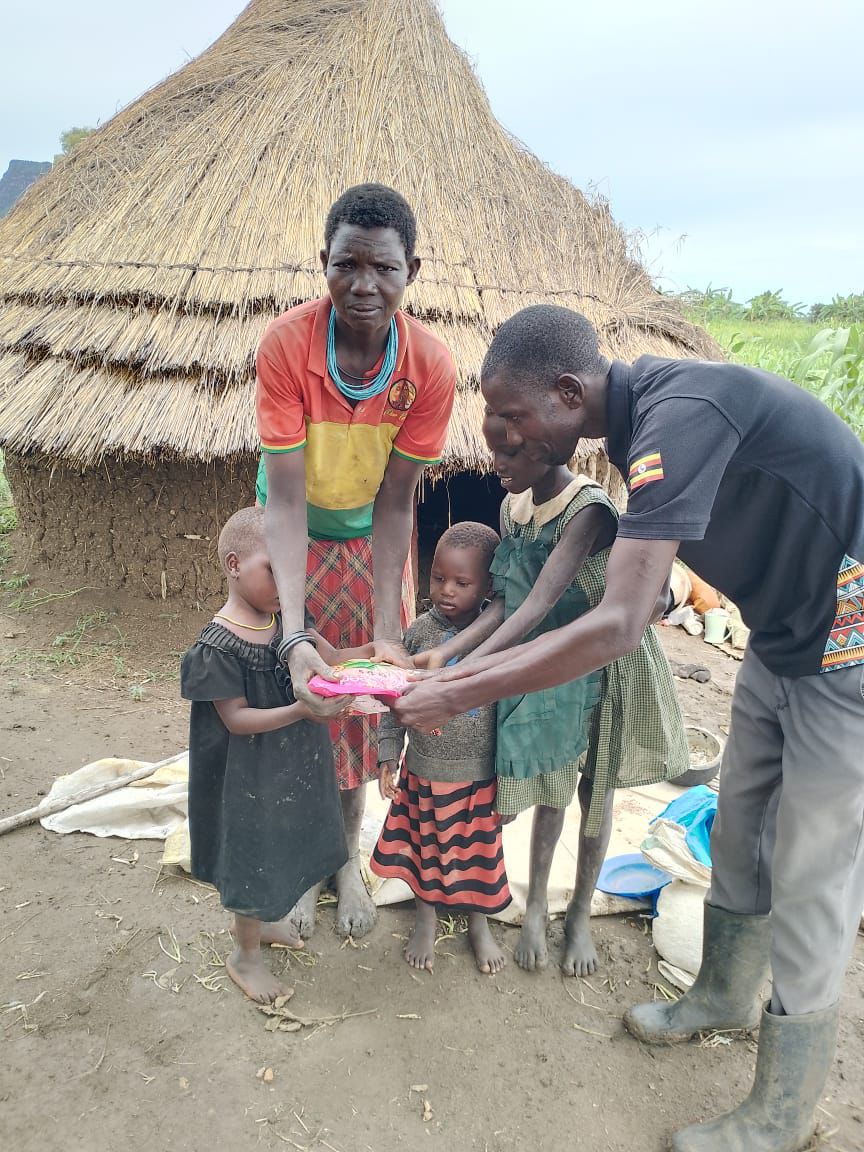
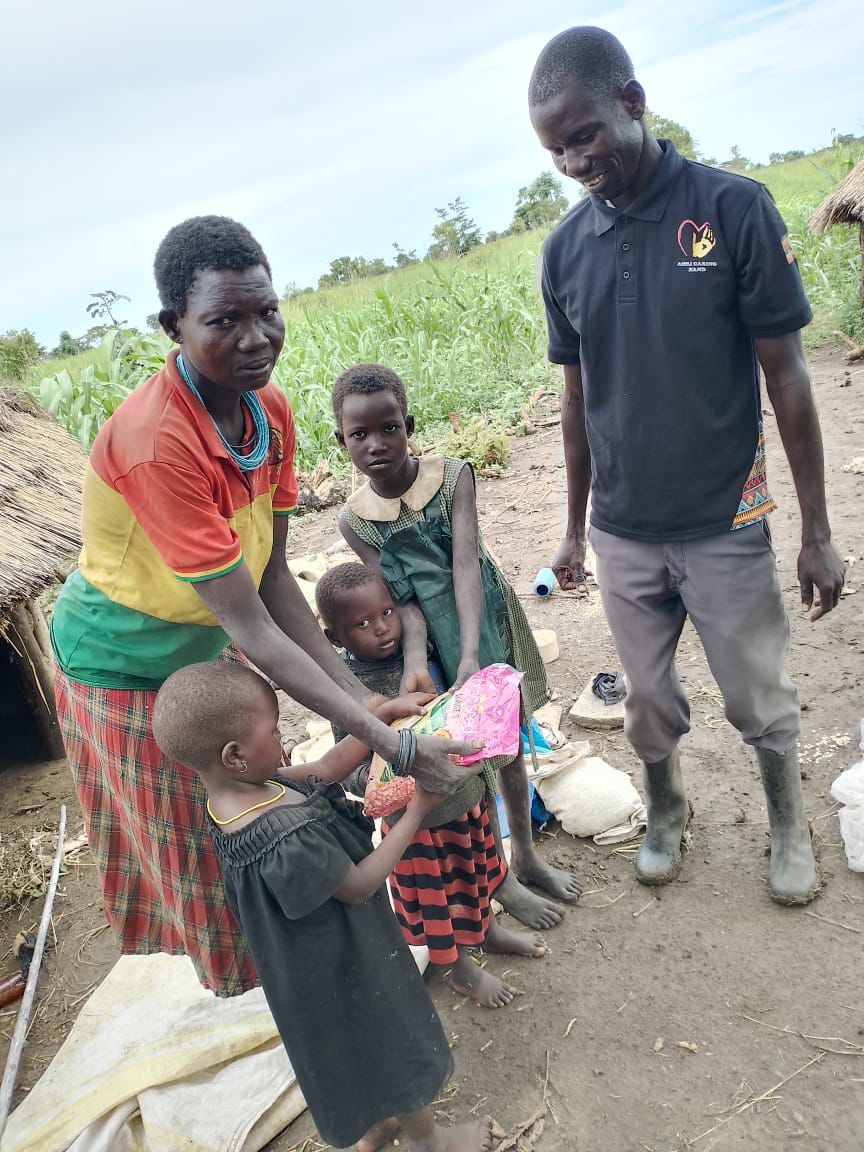
The team visited beneficiary households across the target communities, conducting door-to-door seed distribution to ensure that improved maize seeds reached the most vulnerable families directly. At each household, the team member formally presented a packet of improved seed to the household head or primary caregiver, often a woman or elderly relative responsible for managing the family's food supply. The distribution reached a diverse range of households, including elderly grandmothers caring for grandchildren, young mothers with infants, and multi-generational family units.
Field Assessment and Agricultural Support
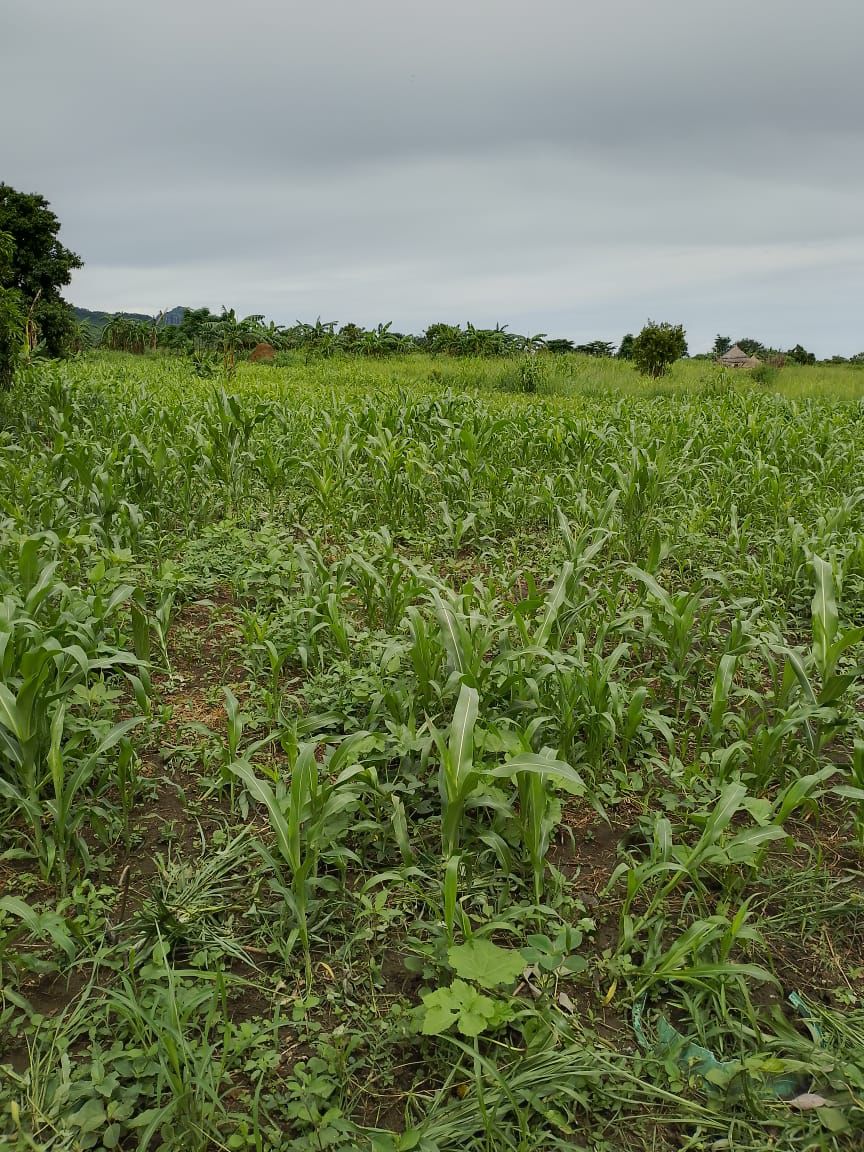
In addition to household distribution, the team conducted walking assessments of community maize fields, observing crops at various stages of growth across the district. Fields visited showed healthy stands of maize planted across significant areas of land. During field visits, the team worked alongside community farmers to demonstrate good agronomic practices including weeding between maize rows, checking plant spacing, and identifying signs of pest pressure.
Community Engagement
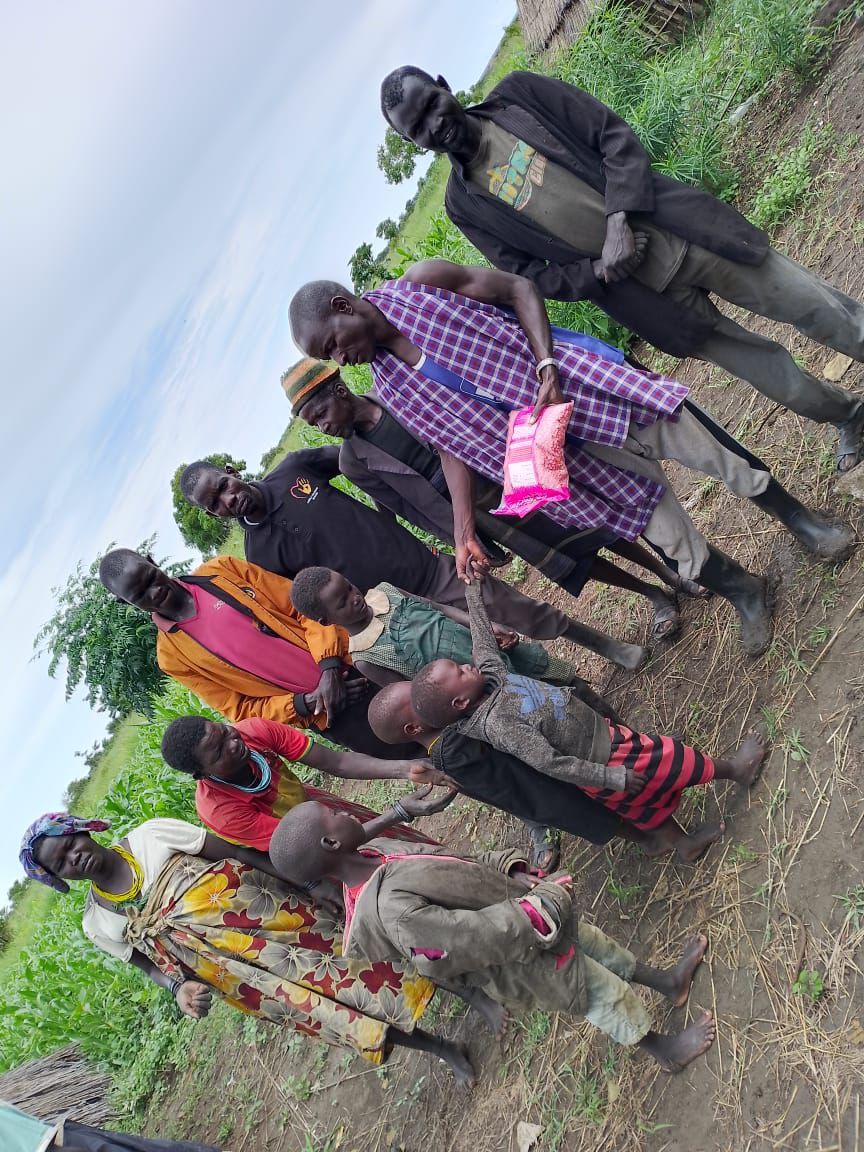
Throughout the project, the team engaged warmly and respectfully with community members, fostering trust and strengthening relationships between Asili Caring Hand and the communities of Napak, laying the foundation for continued engagement in subsequent years.
Key Results & Impact Achieved
Improved maize seeds were successfully distributed to multiple vulnerable households across Napak District, prioritizing female-headed households, families with young children, and elderly caregivers.
Field assessments were completed across community gardens in Napak, documenting the status and health of maize crops at various growth stages.
On-site agricultural guidance was provided to community farmers during field visits, supporting better weeding and crop management practices.
Community relationships were deepened through the project, establishing a meaningful and trusted presence for Asili Caring Hand in Napak.
Lessons Learned & Future Insights
Direct household engagement is essential for effective seed distribution in remote communities like those in Napak, ensuring seeds reach the most vulnerable who are often overlooked in centralized distributions.
Pairing seed distribution with practical field support significantly enhances intervention impact, equipping farmers to plant correctly and manage crops through to harvest.
The enthusiasm and openness of community members highlighted the significant unmet demand for agricultural support in Napak, reinforcing the need for sustained long-term involvement.
Field Photo Documentation
Direct photographic evidence captured during the field intervention in Napak District, Karamoja Region.